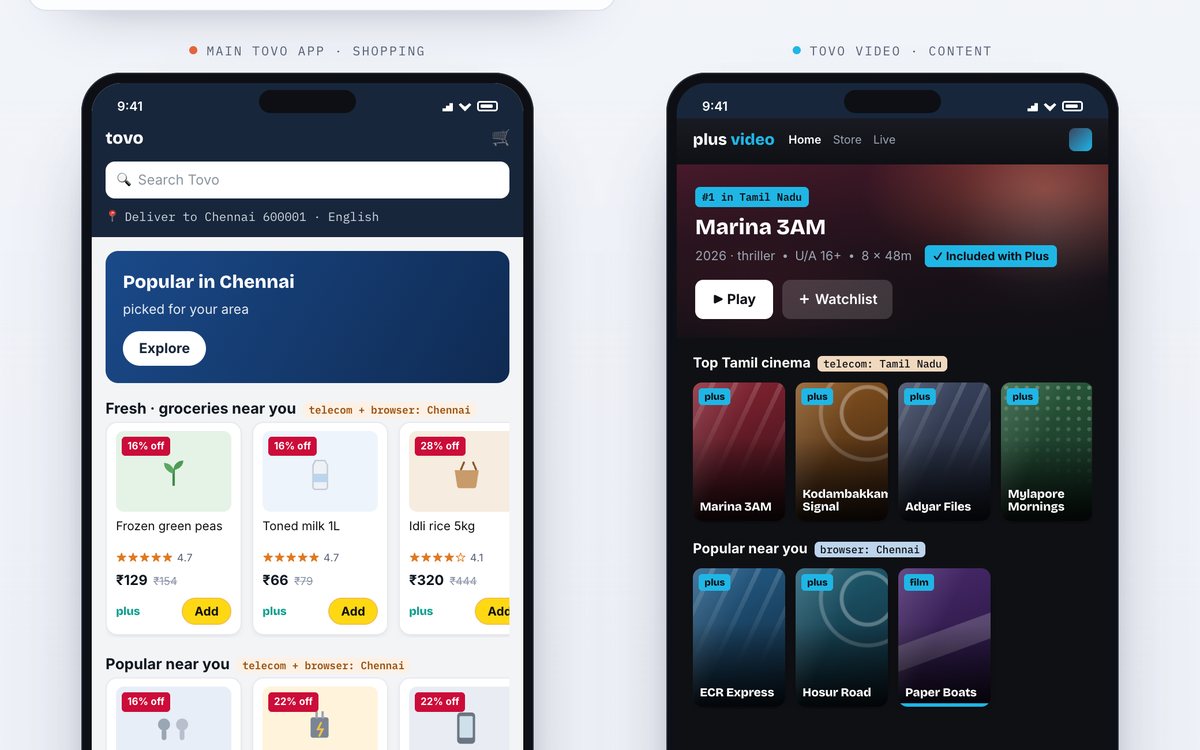
A telecom partner bundles a marketplace membership into a phone plan. A new member taps through and lands on a first screen with nothing behind it: no orders, no watch history, no account. Generic screens lose her in the first minute. A genuine cold start.
The idea, from payments
Card networks recognise a returning customer from a few non-sensitive attributes, with consent and without ever passing the card number. The same pattern works for a partner bundle. The prototype builds her first screen up one signal at a time, cheapest and least sensitive first.
Stage 1, observed for free. Browser and network: language, region, device, plan type. Coarse, but enough to localise before any payment.
Stage 2, partner-shared attributes. Card type and age band, shared with consent at signup. This is where the partnership earns its keep.
Stage 3, a returning user on a new number. A consent-first account-reference check catches the member the phone number would miss.
Stage 4, activation. Reach her where she already is, and get to the first play.
What I would flag
Browser and telecom signals are coarse. They localise a screen; they do not know a person.
Every partner-shared attribute is consent-gated, and the account-reference check is a secure match, never the card number.
The marketplace, the streaming service, the telecom and the agent apps in the prototype are fictional stand-ins. Prices and titles are dummy data.